


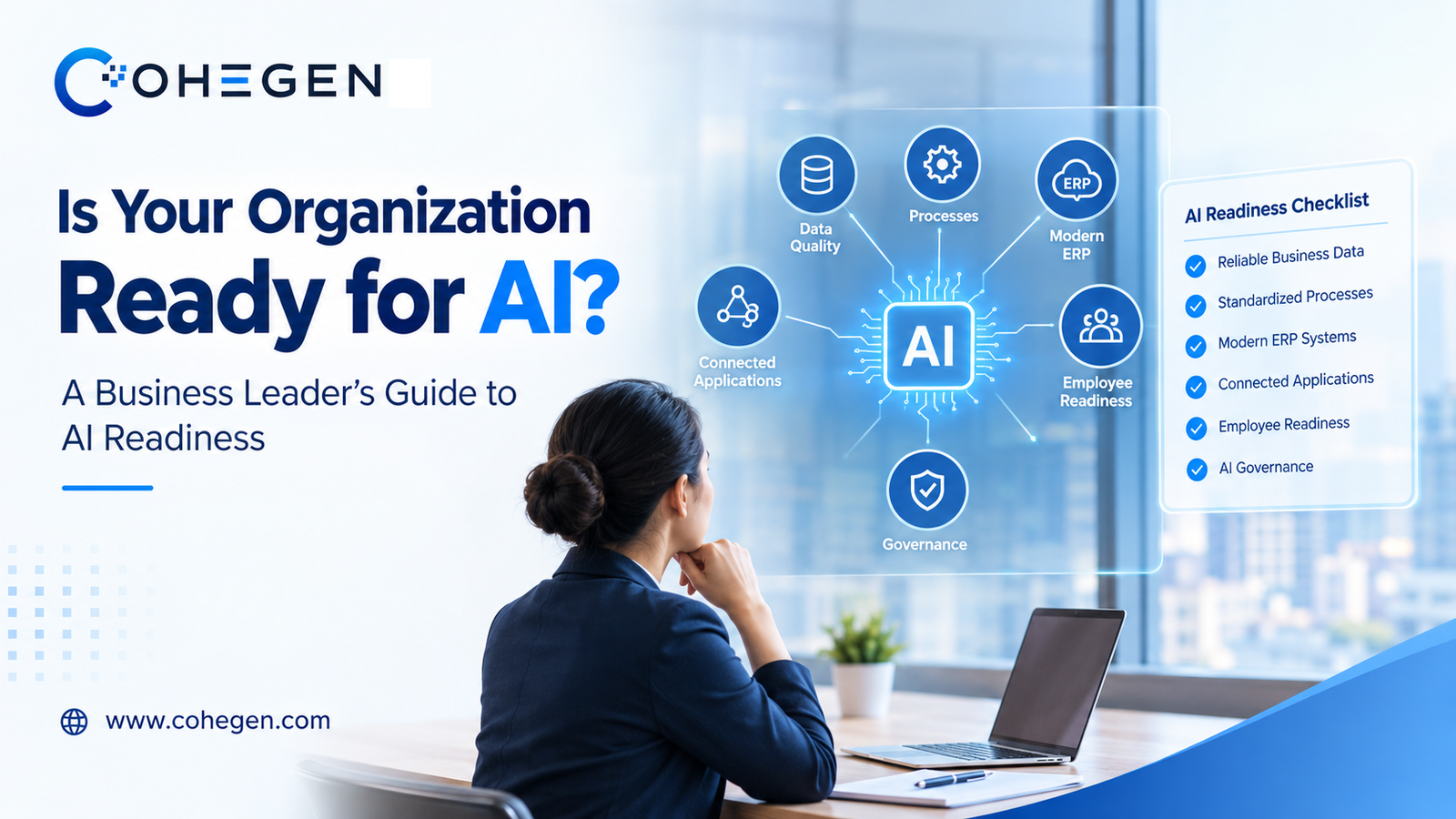

Artificial Intelligence (AI) is rapidly becoming a strategic priority for organizations across industries.
From financial forecasting and process automation to predictive analytics and intelligent reporting, businesses are exploring new ways to leverage AI for operational efficiency and better decision-making.
Solutions such as Microsoft Copilot, Microsoft Dynamics 365, Power BI, and Power Platform are helping organizations introduce AI into everyday business processes.
However, many organizations make a common mistake.
They focus on implementing AI before assessing whether they are ready to generate value from it.
Before asking, “How can we use AI?”, leaders should first ask:
“Is your business ready for AI?”
Why AI Readiness Matters
AI can deliver significant business value.
However, AI systems depend on the quality of the data, processes, and governance that already exist within an organization.
Without the right foundation, AI initiatives often struggle to achieve expected outcomes.
Successful AI adoption starts with organizational readiness.
-
Data Quality Is the Foundation of AI Success
AI systems learn from and analyze business data.
When data is inconsistent or unreliable, the quality of AI-generated insights is affected.
Common data challenges include:
- Duplicate records
- Missing business information
- Inconsistent data structures
- Poor reporting standards
Businesses that invest in data governance and data quality initiatives typically achieve stronger AI outcomes.
Key Question
Can your leadership team trust the data used to make strategic decisions?
-
Standardized Processes Improve AI Effectiveness
AI performs best when business processes are clearly defined and consistently followed.
Organizations with fragmented processes often struggle to achieve predictable AI outcomes.
Examples include:
- Different approval processes across departments
- Inconsistent reporting workflows
- Varying procurement procedures
- Multiple customer service approaches
Standardized processes provide the consistency that AI requires to deliver reliable recommendations and automation.
Key Question
Are core business processes documented and consistently followed?
-
Modern ERP Systems Enable Better AI Outcomes
Many organizations attempt to adopt AI while relying on disconnected legacy systems.
This creates significant challenges.
Modern ERP platforms such as Microsoft Dynamics 365 Business Central provide:
- Centralized business data
- Integrated workflows
- Improved reporting capabilities
- Scalable technology infrastructure
These capabilities create a stronger foundation for AI adoption.
Key Question
Can your current systems support AI-driven business processes?
-
Connected Applications Unlock Greater Business Value
AI thrives in connected digital environments.
When finance, operations, sales, procurement, and customer service applications work together, AI has access to richer information and broader context.
Connected business applications help organizations:
- Improve visibility
- Reduce data silos
- Enhance reporting accuracy
- Accelerate decision-making
The value of AI increases significantly when data flows seamlessly across the organization.
Key Question
How connected are your business systems today?
-
Employee Readiness Is a Competitive Advantage
Technology alone does not drive transformation.
People do.
Employees need to understand:
- How AI supports their work
- Where human oversight remains necessary
- How to interpret AI-generated recommendations
- How to use AI responsibly
Organizations that invest in employee education and AI awareness often experience stronger adoption and greater business value.
Key Question
Are employees prepared to work effectively alongside AI?
-
AI Governance Cannot Be Ignored
As AI adoption grows, governance becomes increasingly important.
Organizations should establish policies around:
- Data security
- Compliance requirements
- Responsible AI usage
- Access permissions
- Risk management
Strong governance helps ensure AI initiatives remain secure, compliant, and aligned with business objectives.
Key Question
Does your organization have a framework for governing AI usage?
The Business Benefits of AI Readiness
Organizations that build the right AI foundation can unlock benefits such as:
✅ Improved decision-making
✅ Faster business insights
✅ Enhanced operational efficiency
✅ Better forecasting accuracy
✅ Reduced manual effort
✅ Increased business agility
The goal of AI is not simply to automate work.
The goal is to help organizations make smarter, faster, and more informed decisions.